P Chapman

Diagonal Flying

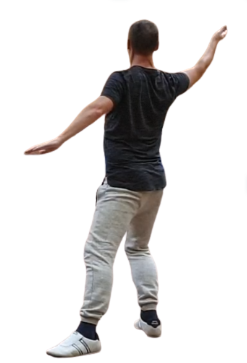
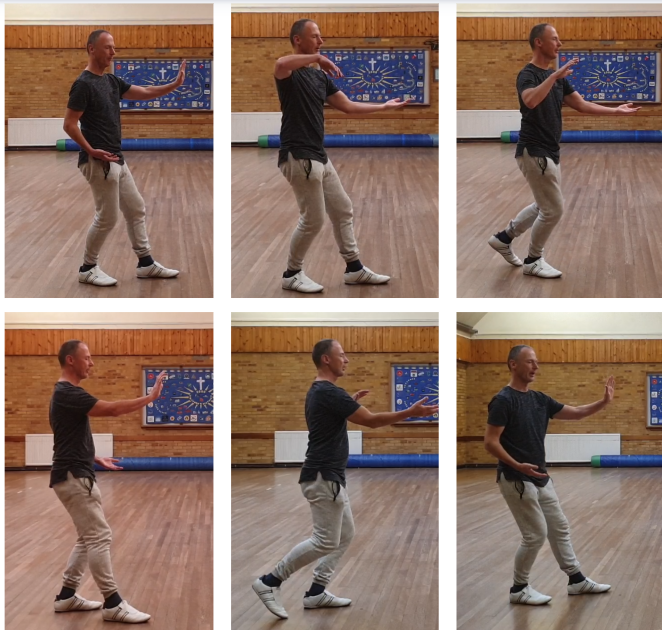
Diagonal flying is a short move that involves a circling, stepping out and opening movement. It ends with probably the only position where your yin arm is higher than your yang arm. How to do it This gives a lovely stretch to the front of your body and the slightly larger step opens the hips and strengthens the legs and balance. Previous Repulse Monkey Next Cloud Hands To view this post […]

Read More

Side to Sides

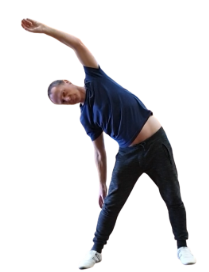
This is a my favourite exercise for dropping tension out of your shoulders and neck. It’s simple to do. Just remember to do it slowly and smoothly and let gravity do the work. Side to Sides Find out more about traditional Chinese conditioning exercises through the tai chi and kung fu classes I run or sign up to our site to learn the wealth of material we have here. To […]

Read More

Unbendable Arm

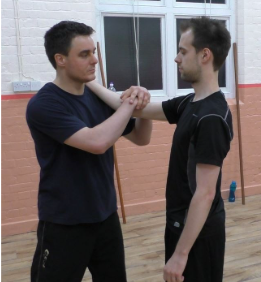
Relax and extend The unbendable arm is a concept that is talked about a lot in tai chi and aikido. However, it is a part of most traditional Chinese martial arts. It is a way of holding your arm so that it cannot be bent at the elbow no matter how hard somebody tries. Eventually the same principles can be applied to any joint in the body. The point of […]

Read More

The Dragon’s Back

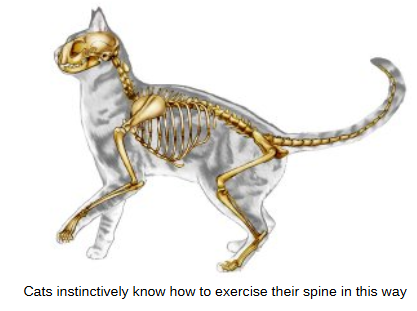
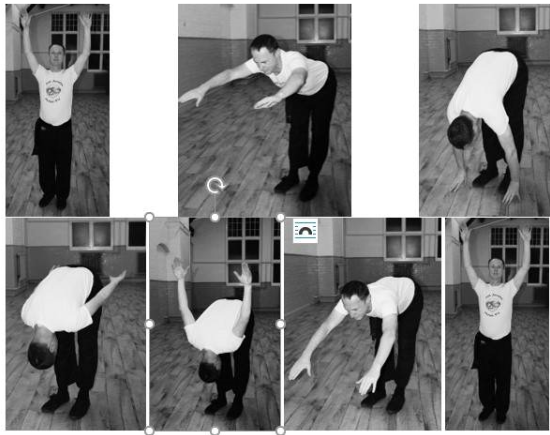
Develop a more flexible spine. Back problems are one of the major ‘diseases’ of the modern world. They account for a large percentage of visits to the Doctor and almost everybody, as they age, suffers with their back The sheer amount of time we spend sitting down with our backs ill supported leads to the muscles in the front of our body gradually shortening. The back muscles lose tone and […]

Read More

Repulse Monkey

This move involves both your arms doing a yin circle, one going forward while the other pulls backward, and at the same time you’re stepping backwards in the cat step. It’s best to learn the arm movements and footwork separately then you can combine them later. The footwork The arms Each arm is doing the yin circle. Make sure you know this before you start. You should do as it’s […]

Read More

Fist Under Elbow

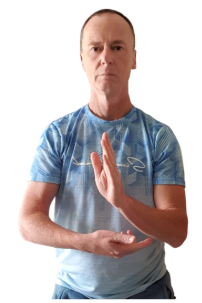
This is the first move in the third section. it moves you from the single whip posture into a guard position via a strong twist to the left. There is an ancient Taoist symbol for peace and balance which has one hand with the fingers pointing up and the other hand beneath it. The lower hand signifies yin or the earth. The upper hand signifies yang or a plant growing […]

Read More

Forwards Clock

This is another good exercise for restoring mobility. I often do this after doing the sideways clock. This exercise focuses on opening the front and back of the body. Here are the teaching points for this sideways clock exercise. Notes Find out more about traditional Chinese conditioning exercises through the tai chi and kung fu classes I run or sign up to our site to learn the wealth of material we have here. To […]

Read More

All Parts Move

In tai chi no part of your body moves on it’s own. Every part is supported by the whole. Most of the movements you do in life only involve a small part of your body. It’s very rare that any movement involves all of your body unless you’re trying to lift or move a heavy object. Even then the body is uncoordinated and the parts don’t work together very well. […]

Read More

Expand Outwards

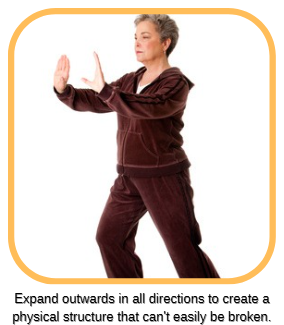
Whenever you feel any kind of fear, stress, anxiety or anything of the kind your body instinctively contracts inwards. This is a natural reaction that tenses your muscles ready for fight or flight. It’s like a tortoise withdrawing into its shell at the first hint of danger. The trouble is that, unlike the tortoise, you rarely get a chance to come back out of your shell and relax again afterwards. […]

Read More

Form Second Section Video

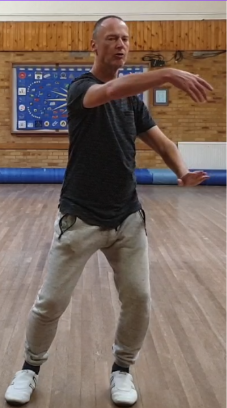
As with the first section work on each movement individually first. Then put them together. You’ll notice that the moves after embrace tiger, return to mountain are the same as for the first section – rollback and press, push and single whip. You should already be becoming familiar with these important moves. Both the videos below begin with single whip which was the last move of the first section. To […]

Read More

Form First Section Video

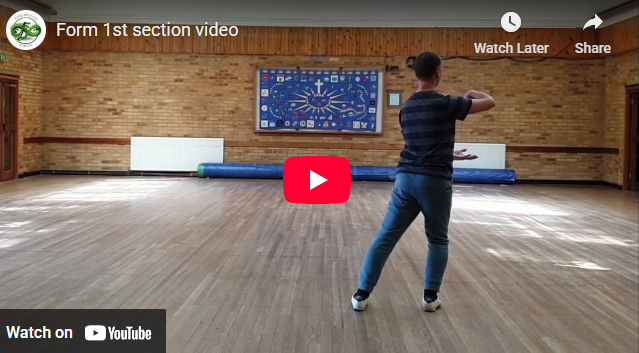
This video shows you the first section of the form up to the first single whip from two different angles. Once you’ve learned each of the movements separately use this video to see how to join them together. Then work on incorporating the 4 key qualities of movement and breathing. To view this post in full you’ll need a Basic Level membership. This will give you access to a wide […]

Read More

Skip to toolbar