Stretching is an important part of conditioning to be fitter and healthier. Do you really need more reasons than that to stretch regularly? If the answer is yes, consider this.
Imagine if you could have a bath in WD40. It would seep into all your joints, restoring them to their full range of motion, lubricating every part until it was as new and dissolving away all your tension. What would that feel like?
It loosens the tension around your joints
Tighness in your joints affects every move you make. All day long you are fighting against the unfelt tension in your muscles that makes all your daily activities more difficult than they need be.
One of the key advantages to stretching is that you feel less tired at the end of the day as you are using less effort to go about your day to day tasks.
Every movement would now be so easy. With no tension to prevent full movement, you would feel unbelievably free. Every movement your body makes would be a pleasure instead of a chore. With no tension to slow you down or fight against, everything would be effortless. You would breeze through the day and enjoy every part of it with an amazing feeling of freedom and lightness. This is what regular stretching does for you.
Here are 4 great reasons why flexibility training (stretching) should become a regular part of your life.
It restores a fuller range of movement throughout your body
As you age the range of movement you can do in each of your joints gradually decreases. Movements that were easy at twenty are challenging at forty and virtually impossible at sixty.
This lack of range of movement also negatively affects your ability to balance and means that injuries are far more likely as your joints aren’t able to move enough to cushion impacts. Regular stretching can restore a fuller range of movement, improve balance, stability and grace and make you less prone to injury.
Most injuries are caused either by excessive tension in muscles or joints being moved beyond their normal range of movement. Flexibility training can help with both of these.
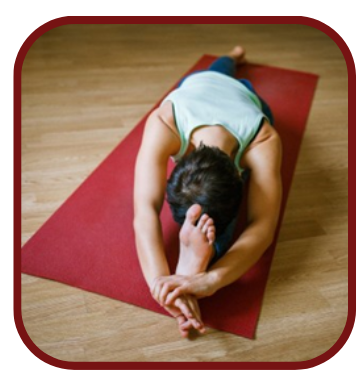
It improves your posture
The more joint flexibility you have the easier it is for you to stand in a relaxed, upright posture that is aligned with the ever-present downward force of gravity.
Virtually all postural problems are caused by tightening of muscles in different areas which pull on the skeleton thus misaligning it. Over time these imbalances become more pronounced and are almost certain to lead to an old age accompanied by pain and severely restricted movement.
Most postural problems along with a lot of chronic pain are helped enormously by becoming more flexible.
It helps prevent post-exercise pain and stiffness (DOMS)
Delayed Onset Muscle Soreness (DOMS) will be familiar to those who participate in medium to heavy exercise. This stiffness can be alleviated by thoroughly stretching the affected muscles before and after you exercise session.
Stretching helps remove the lactic acid build up which leads to localised soreness and also improves blood circulation by releasing the tight muscles which impede blood flow. This can help greatly with heart problems and can be as effective as cardiovascular activity in helping with heart disease.
There is a downside. Flexibility can take a long time to achieve. Of all the aspects of fitness – strength, stamina, coordination – flexibility takes the longest. In my book “Stress Proof Your Body” I give plenty of tips to speed up the process of achieving flexibility safely.
The more flexible you are, the more you are able to relax. The more you are able to relax, then the easier flexibility is to attain. It is a virtuous circle.
This point is a very important one. It is at those times when you are feeling very tense and unable to relax that doing stretching exercises will do you the most good. You may well feel too tired to stretch, but it is then that opening your joints and stretching your muscles is exactly what you need – yet more reasons to stretch.
If you had 10 minutes spare, you could lie down for those 10 minutes or you could do five minutes of stretches and lie down for the other five minutes. The second option would leave you feeling far more refreshed and invigorated.
For those of you who find it difficult to sleep at night, why not try doing some stretches just before you get into bed? Remember, the more flexible you are, the more you are able to relax. I do this most nights and find it helps me to drop off to sleep more quickly and to sleep more soundly. Maybe it will work for you too.
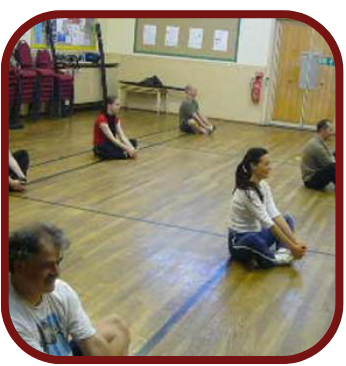
Even a small gain in flexibility can pay great dividends to your posture and the way you feel about yourself.
Flexibility is joint-specific. You can be very supple in some joints while having very little movement in others. You will also find that your range of movement (ROM) in each joint varies from hour to hour. Hence you can get a good idea of how tense you are and where you habitually hold on to tension by doing a range of stretching exercises and also by doing them at different times during your day.
Hard and soft tension
As I said in my other post about the importance of flexibility anybody who is used to stretching exercises will be familiar with what I term ‘soft’ tension. This is the feeling you get when you wake up in the morning and try to touch your toes and can get barely past your knees.
You are aware that this isn’t the permanent limit of your flexibility, and with a few warming-up movements and some gentle stretching you can regain and reach your true limit, however far down that may be.
Your true flexibility of that joint is limited by ‘hard’ tension. The hard tension marks the extreme limits of your movements, but it can and will be gradually softened by regular stretching.
As you move a joint to towards the end of its range of movement, resistance starts to build up. If you move quickly into any extended position, then the muscles will contract to prevent the joint from being injured. This is soft tension, and this can quickly harden if the body feels the joint is at serious risk of injury.
Your aim is to prevent the tension from hardening and limiting your range of movement. However, follow the golden rules below and your stretches will be both safe and effective.
Hard tension marks the current limit of your flexibility
The Golden Rules of Stretching
- Relax the area you’re stretching. Your aim is to release – not increase – tension. You cannot stretch a tight muscle. Never force yourself into a stretched position. Never should you feel pain in a stretched position. It may help to tense the muscle before you stretch it. Then as you release the tension relax further into the stretch as you breathe out.
- Move slowly into each position. When a joint is moved quickly towards the end of its range of movement, the muscles surrounding it automatically tighten up to prevent injury. As you are aiming to relax the muscles and release that tension, this would clearly be counterproductive. So move slowly and smoothly into each position so as not to trigger soft tension that would then need to be released before you can work on the harder tension.
- Don’t be afraid to move within the stretch. Move your joints around gently rather than holding static positions. This can encourage tissues to soften and lengthen even more.
Find out more about traditional Chinese exercises to develop a relaxed and powerful body and a focused mind through the tai chi and kung fu classes I run or sign up to our site to learn the wealth of material we have here.