Taoism (Daoism) is an ancient Chinese philosophy – possibly the oldest surviving spiritual philosophy in the world. This article seeks to explain what it is but that is very difficult. So difficult in fact that the very first line of the main Taoist book the Tao Te Ching states that ‘the Tao that can be described is not the true Tao.’ I will do my best to introduce this fascinating philosophy here. Further posts will go into other aspects of Taoism in more detail.
In a nutshell Taoism reflects man’s attempts to understand and align himself with the Tao which has been described in its simplest term as the way of nature. The Tao is an enormous concept that is impossible to describe in words. In itself it is formless and changeless yet provides everything in the universe with both form and the energy to change. The Tao has been likened to a great river that carries all of the universe along in its flow.

Taoists recognise that only the Tao is unchanging so everything else is changing all the time. They understand impermanence and seek, not to hold on to what was, but to continue their journey towards their destiny without guilt or regret. They also recognise that nothing really dies, it just changes form and that the body is just a shell in which the immortal spirit is carried in this particular lifetime.
Taoism is not a religion. There are no gods to worship and no attempts to persuade others to your point of view. No wars have been fought over Taoism although, many times in their history, the ruling elite have tried to crush the Taoist philosophy, recognising that the Taoist views on morality and the government of men could be seen to be dangerous. Taoism has always survived, although it is now but a shadow of what it was even a century ago. Many of the temples and the carefully recorded teachings were destroyed during the second world war and the cultural revolution.
Taoists seek to understand themselves and their place in the cosmos through careful observations of all the things and processes in the world around them. They also seek to feel and understand the processes that take place in their minds and bodies through various types of meditation and other methods of self control. Through all of this they seek the Tao and try to discern its flow. They recognise that everything is cyclical – locked within cycles of decay and regeneration and so have developed methods to seek whereabouts on the cycle different aspects of their lives are so that they can know how best to proceed along the flow of their life.
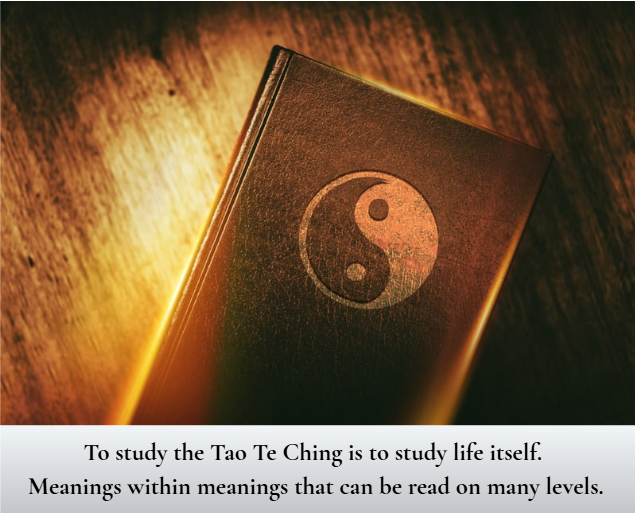
Those who seek Taoism today usually turn to a book called the Tao De Jing (Tao Te Ching). It is a poem of 81 verses said to have been written around 600BC by a man known by the title Lao Tzu (Laozi). There is much controversy whether he actually wrote them or whether they are just a collection of old Taoist sayings brought together around that time. Either way the Tao Te Ching is a collection of sayings that describes the main teachings of Taoism. The book is enormously influential and is now said to be the best selling book in the world after the bible.
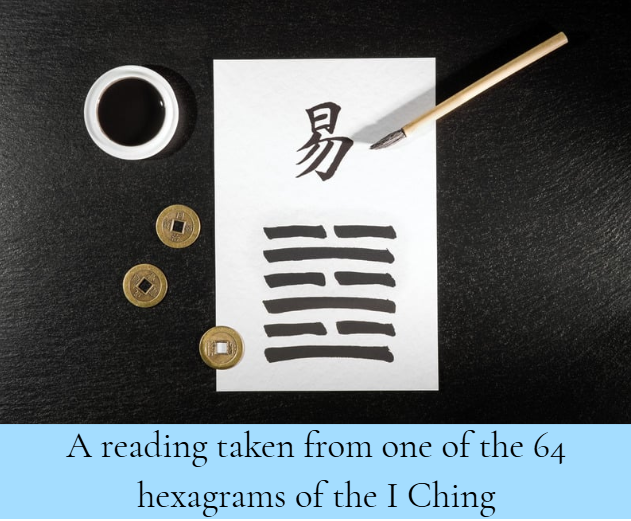
The other major book is the Yi Jing (I Ching). This is a book of divination that uses the complementary forces of yin and yang within each of the 64 distinct sets of circumstances that may arise from any situation. Despite the fact that the book is over 3000 years old, it is still commonly used today, not just in China but across the Western world as well. I have used it many times myself and have been amazed at its accuracy. I will write a post or series of posts on this important work in due course.
What did the Taoists ever do for us?
Taoism has given the world so much. The Taoists of old were the scientists, artists and philosophers of their day. Most of the hundreds of discoveries and inventions that have come out of China over the last 2000 years have been due to the Taoists. The Taoist concepts of yin and yang, the five elements, the three essences of jing, qi and shen and many other concepts may seem whimsical to many westerners but, in fact they are valid models that don’t just describe natural processes but are able to predict all kinds of things from the weather to how long to cook food, to how long illnesses take to heal and so on.
The Taoists used their in depth knowledge of natural rhythms and processes to invent and discover so much that we take for granted today. Here is a very brief list of the most important:
- Paper inc writing paper and wallpaper
- Printing
- Porcelain
- Gunpowder
- The compass
- Silk
- Tea
- The seed drill
- Iron and steel smelting
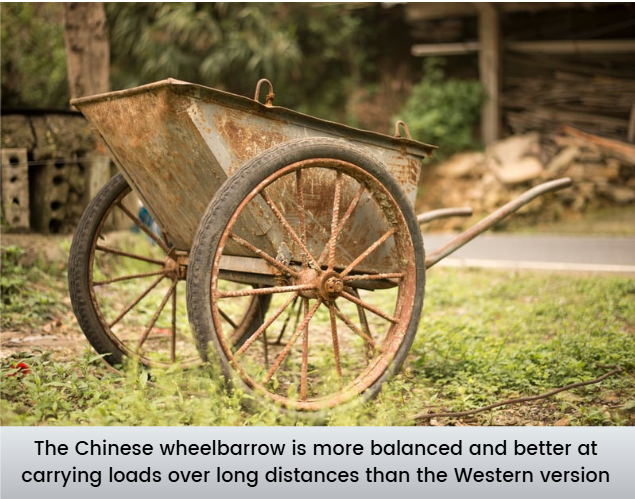
- The wheelbarrow
- Vitamin C and other nutrients
- The inner ear
- Diabetes
- Circadian rhythms
the list goes on and on and on.
Taoism is a profoundly deep and wide philosophy that encompasses everything in the known universe (and much outside of it). It is interesting to note how much modern science is increasingly becoming aligned with principles that Taoists have known and written about for many centuries. These include the fact that matter and energy are as one to the knowledge that everything in the universe (and in your body) is connected to everything else, nothing is fundamental. Our current digital age in which all of our information can be reduced to just 0s and 1s powers every computer. This was developed by Leibniz who was inspired by the ancient Taoist work of the I Ching which reduces all the possible outcomes of a situation into the yins and yangs of straight lines and broken lines.
Taoism is indeed a living tradition that encompasses all of mankind’s knowledge from it’s distant origins in shamanism to the digital world of today.
In short Taoists seek to align with nature, with the Tao. To become sensitive enough to feel its many manifestations so that every thought and movement is a full expression of themselves aligned with all of nature. Taoism offers structured pathways to attain that state.